
June 5, 2025
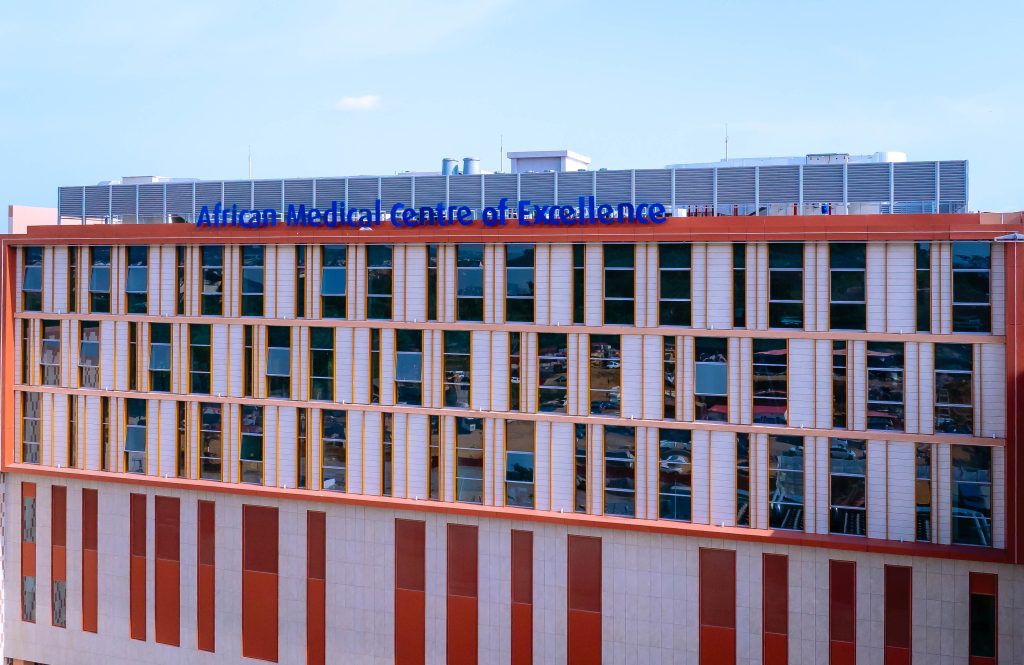
The $300 million tertiary medical facility, developed by the African Export-Import Bank (Afreximbank) in partnership with King’s College Hospital London, also aims to drastically trim the estimated $6 billion to $10 billion Africans spend annually seeking medical treatment abroad, including Nigeria’s share of over $1 billion.
Designed to meet the highest global standards, AMCE Abuja offers world-class services across oncology, haematology, cardiology and general medical services.
The opening of AMCE Abuja comes at a critical time, as Africa seeks to strengthen its healthcare systems and reduce reliance on external providers.
The COVID-19 pandemic exposed the vulnerabilities of this reliance, with global supply shortages putting immense pressure on African nations.
Similarly, past responses to health crises like Ebola have reinforced the urgent need for resilient, homegrown solutions.
Decades after independence, millions of Africans continue to suffer from diseases like sickle cell and malaria, conditions that could be better managed with targeted local research and investment.
Yet these illnesses often receive limited global attention or funding, leaving critical treatment gaps.
AMCE Abuja represents a bold step forward, bringing world-class care to the continent, centring African health priorities, and laying the groundwork for a healthier, more self-reliant future.
At the opening ceremony, Afreximbank President Professor Benedict Oramah, said: “We are making a bold, collective statement: we will no longer accept medical vulnerability as destiny.
“The African Medical Centre of Excellence stands as proof that Africa is ready to compete with the best in global healthcare.”
He said he welcomed Afreximbank’s initiative and the partnership with King’s College Hospital “for turning this audacious dream into reality. This is what happens when African institutions confront African challenges with African solutions.”
Prof Oramah went on: “Our vision for the African Medical Centre of Excellence is not just to provide top-notch healthcare but to serve as a catalyst for the transformation of the African health sector, making a bold statement to the world that Africa is finally taking its destiny into its own hands in healthcare sovereignty and global standards.”
He also announced the launch of the Africa Life Sciences Foundation to act as the vehicle for raising appropriate risk capital to drive research efforts, calling on African and non-African governments, banks, high net worth individuals and corporate organisations to join the Bank in investing in the hospital, through this platform.
Brian Deaver, Chief Executive Officer of the AMCE, said the hospital “represents a paradigm shift in how specialised medical care is delivered on the continent. Our integrated model encompasses early diagnosis, advanced treatment and long-term disease management, creating a seamless continuum of care that improves patient outcomes and health experiences.
“Our mission extends beyond treatment to include world-class medical education, groundbreaking research and continuous innovation. By combining international expertise with local talent development, the AMCE will build sustainable healthcare capacity that serves generations to come.”
Through its clinical partnerships with King’s College Hospital, London and The Christie NHS Foundation Trust, the AMCE will be home to advance research, education and medical excellence by fostering continuous knowledge exchange.
In its next phase, the AMCE will expand to include a second 350-bed hospital, medical and nursing schools, a medical sciences foundation, research centres and residential facilities. Together, this integrated ecosystem will position Nigeria as a leading hub for specialist healthcare, medical training and clinical research on the continent.
The AMCE is the largest specialised private hospital in Nigeria and West Africa focusing on cardiovascular services, haematology, comprehensive oncology and general medical services. It currently boasts of 170 beds with a plan to expand this to 500 beds upon completion.
It features the largest stem cell laboratory in the region, 15 post stem cell isolation rooms in West Africa alongside five theatres and three catheterisation laboratories.
It also includes a 20-bed intensive care unit, six critical care unit beds and 20 chemotherapy chairs with compounding pharmacy.
Comments are closed.